
Why slab leaks happen in this area
Most homes in Union City are built slab-on-grade, with supply lines running inside or beneath the concrete. Over the years, copper corrodes, fittings fail, and shifting red clay moves the slab just enough to strain a pipe.
Wet clay swells and dry clay shrinks, so the ground under a house moves with the seasons. A hot, dry stretch followed by a week of rain is a common time for a hidden line to let go.
How to tell if the slab is leaking
Slab leaks hide under flooring. Clues:
- A warm spot on a tile or hardwood floor that has no heater under it
- The sound of running water when every fixture is off
- A water bill that jumps with no change in use
- Cracks in tile, floor buckling or wet carpet near an interior wall
- Baseboards that swell with no source above them
Slab leak complications
- More than one leaking line under the same slab
- Flooring glued directly to concrete
- Moisture trapped under tile
- Drying that must wait for the plumber to finish
What we do once the leak is found
Confirm the source is closed
Your plumber locates and repairs the line. We start once the water is off.
Pull wet flooring
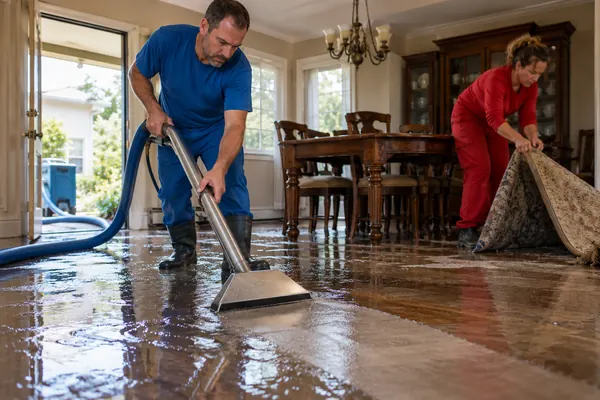
Carpet, pad, laminate and wood are lifted so the slab can breathe.
Extract standing water
Water on top of the slab is vacuumed, and we check for pockets under the vapor barrier.
Dry the slab and walls
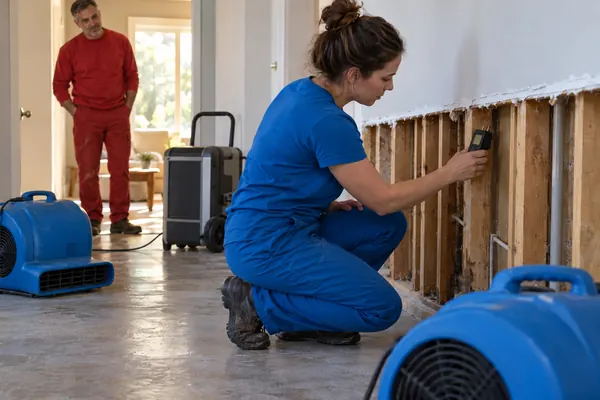
Floor drying mats, air movers and dehumidifiers pull moisture from concrete and wall bottoms.
Cut back drywall if needed
Drywall that wicked water above the floor line is trimmed to a clean cut for easy repair.
Monitor until stable
Concrete dries slowly. We record readings until they hold steady at a dry level.
Questions we hear about this
Do you fix the pipe?
No. A plumber repairs or reroutes the line. We handle water removal, drying and cleanup of the damage.
How long does concrete take to dry?
Longer than most people expect. Expect several days of equipment, and readings guide when it is safe to install new flooring.
Will my floors be ruined?
Carpet and pad are often removed. Tile can sometimes stay if the thinset is sound. Hardwood and laminate often have to be replaced.
Does insurance cover slab leaks?
Policies vary. Many cover the resulting water damage but not the pipe itself or the cost of tearing out the slab.
Could the leak cause mold?
Yes, if the area stays damp. That is why we dry until readings stay low.
While the plumber and our crew are on the way
- Shut off the water at the main valve
- Call a plumber who does slab leak detection
- Lift small furniture and rugs off wet areas
- Note which rooms feel warm or wet
- Save water bills. They help show when the leak began
Slab leak damage: typical cost
Drying and removing wet materials after a slab leak typically runs $1,200 to $5,000 as an estimate. This does not include the plumber or breaking the slab. Hardwood and tile add cost. Call for an exact quote. See all price ranges.
Working around a plumber's schedule
Slab leak repair can take a day or more. The plumber may tunnel under the slab, break out the floor, or reroute the line through the attic. We work around that.
Usually we start extraction and pull flooring first, then the plumber opens the slab, and then we set drying equipment once the line is fixed. Keep us in the loop on what the plumber finds, because a second leak under the slab changes the drying plan.
Read next Shut off water fast. See what to do in the first 60 minutes.