Where the water usually comes from here
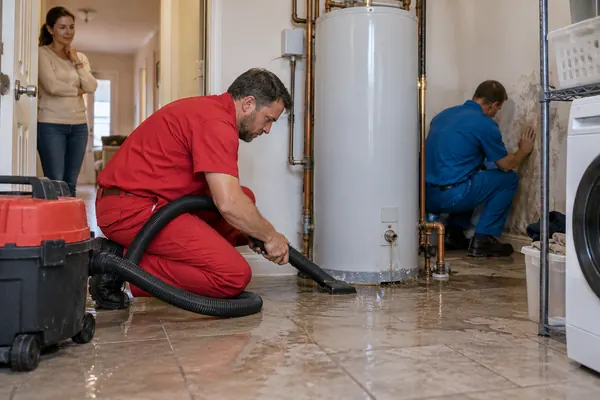
In Union City the usual causes are a failed washing machine hose, a dishwasher line, an overflowing tub, or runoff pushing through a door threshold during a Southeast downpour.
Southern homes lean on slab foundations, so water spreads flat and wide across the floor instead of draining down. A half inch over a living room is a lot of gallons, and every bit of it wants to get under the flooring edge.
Signs the water went deeper than the surface
A floor can look dry on top and still hold water below. Watch for:
- Hardwood boards that cup, crown or lift at the edges
- Carpet that squishes when you step even after blotting
- Baseboards that swell or pull away from the wall
- A sour smell from the floor that gets stronger in humid weather
- Tile grout lines that stay dark for days
What goes wrong on extraction jobs
- Water trapped under click-lock flooring
- Pad stapled or glued so it comes up in pieces
- Water that crossed into a closet or adjoining room
- Furniture stain bleeding onto wet carpet
How extraction works, start to finish
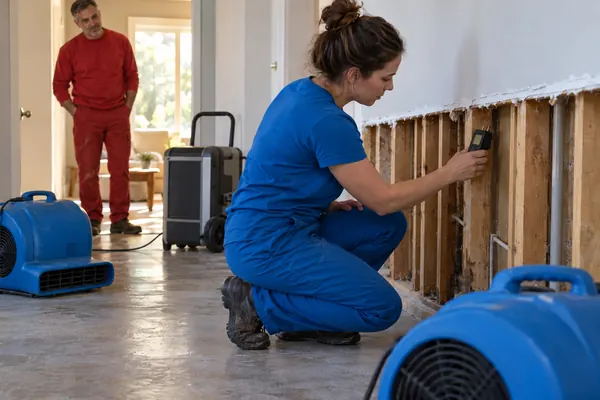
Walk the wet area
We map where the water went, including rooms that look fine but share a wall or floor with the wet one.
Test the water
Clean supply water is handled differently from gray water or sewage. We confirm which before we start.
Remove standing water
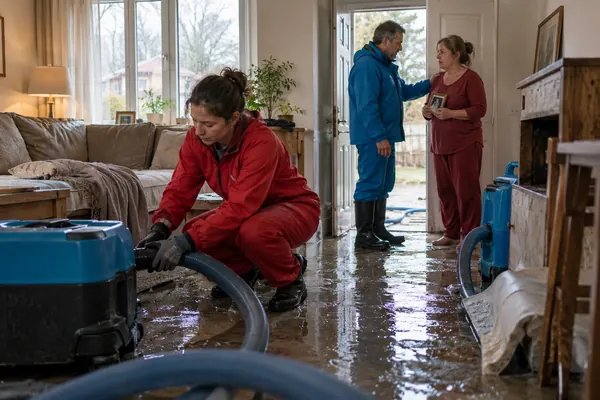
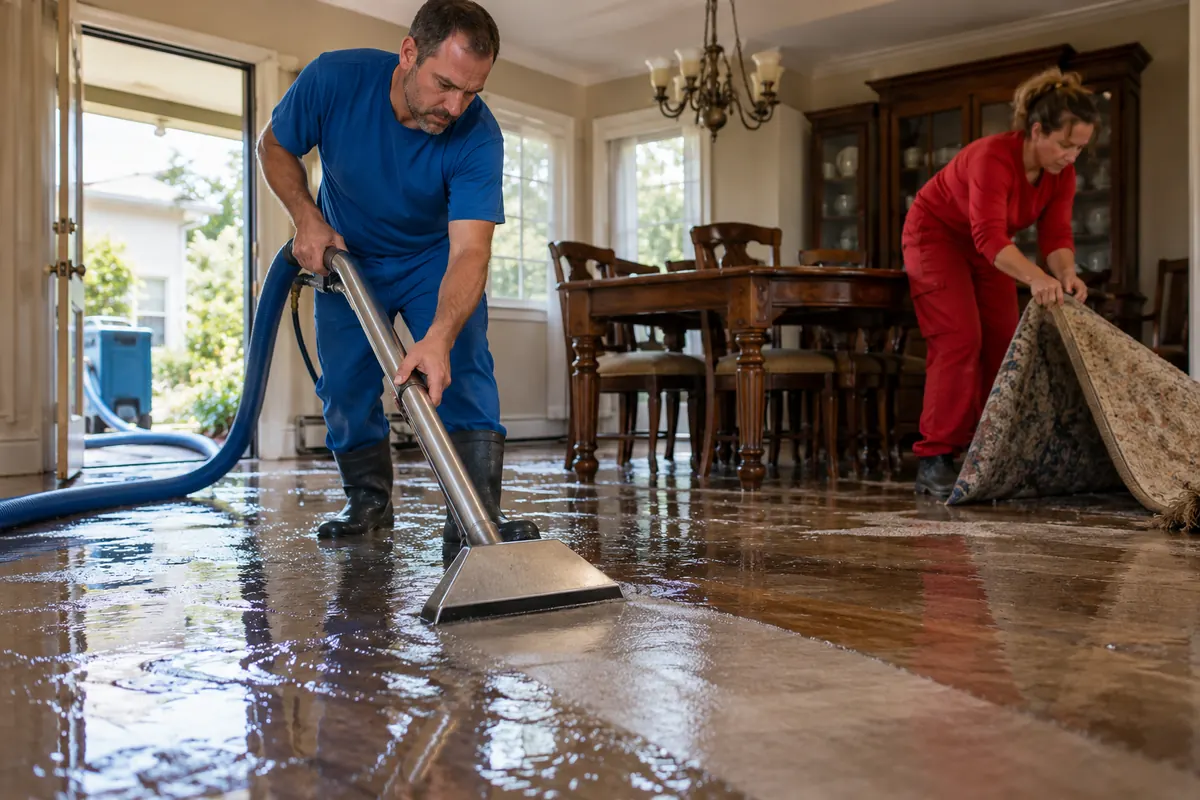
Submersible pumps handle deep water. Wand extractors work the floor in overlapping passes.
Lift carpet and pad
Soaked pad is cut out and hauled away. Carpet is peeled back and floated if it can be saved.
Extract from hard floors
Hardwood and tile get weighted extraction to draw water from seams and joints.
Hand off to drying
Once the puddles are gone we check moisture and set equipment for the drying phase.
Questions we hear about this
Can hardwood be saved after a flood?
Often yes if extraction starts quickly and drying is controlled. Boards that have already cupped hard may need replacing, and we will show you the readings.
Do you remove the carpet?
We pull the pad nearly every time because it holds water like a sponge. Carpet itself can sometimes be dried in place after clean water.
What is the difference between extraction and drying?
Extraction removes liquid water. Drying removes the moisture in the materials. You need both, and extraction comes first.
How much water is too much for a shop vac?
Anything past a few gallons, or water that has touched carpet pad. Rental vacs leave a lot behind.
How soon should I call?
As soon as you see standing water. Every extra hour lets it travel farther into walls.
Hardwood, tile and carpet each need a different touch
Carpet gets a weighted extractor and the pad usually goes. Tile floors are quick to extract, but water hides in grout lines and under the tile edge. Hardwood is the careful one: boards can drink water from the bottom and swell for days, so we pull moisture out of the seams with low, steady suction instead of dragging a wand across the top.
Engineered flooring and laminate soak up water at the seams and can delaminate fast. If you have either, tell us when you call so we can plan for it.
Typical extraction pricing
Extraction alone often lands between $500 and $2,500 as a typical estimate. Deep water, large rooms and carpet pad removal push it up. A shallow spill on tile sits at the low end. Exact figures need a look at the floor. See all price ranges.
What you can do before we get there
- Shut off the water supply to the leaking fixture or the main valve
- Pull small rugs and wet items off the floor
- Put foil or plastic under furniture legs so stain does not transfer
- Open interior doors so we can reach every wet room
- Do not run ceiling fans or heaters. They can spread contamination
Read next Need a plan for the first hour? See our first 60 minutes guide.