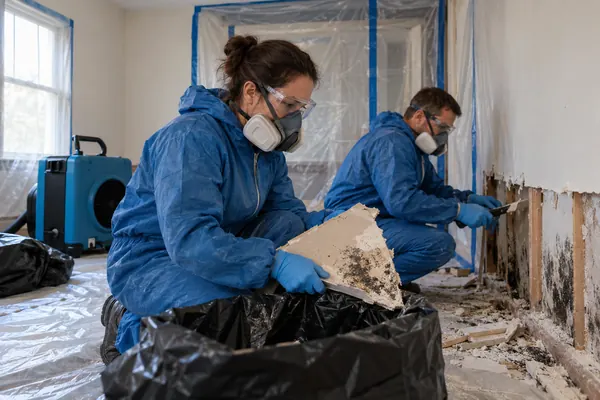

What a roof leak looks like inside
Water often travels far from the roof hole:
- Yellow or brown rings on the ceiling that grow after rain
- A bulge in the drywall that holds water like a bag
- Dripping from a light fixture or vent
- Peeling paint at the top of a wall
- A damp smell in the attic or upstairs closet
Before the crew arrives
- Put a bucket under the drip and move furniture away
- Do not turn on a ceiling fan or light on a wet ceiling
- If the ceiling bulges, poke a small hole to drain it and stand clear
- Photograph the stain and the damage before moving things
- Call a roofer to patch or tarp the hole. We handle the water damage inside
Ceiling leak problems
- Insulation that stays wet for weeks
- Ceilings that sag and drop without warning
- A leak that stops and starts with the weather
- Mold already starting in the attic
How Georgia weather finds the weak spot
Southeast thunderstorms blow rain sideways and drive it under shingles, around vents and past chimney flashing. A few missing granules or a cracked boot around a plumbing vent is enough.
The sun is hard on roofs here. Summer heat cooks shingles and sealant, and a cold snap shrinks them again. By the time a stain shows on the ceiling, the roof deck and insulation above it have usually been wet for a while.
How we deal with a wet ceiling
Relieve the water
If the ceiling is holding water, we poke a small hole to drain it into a bucket before it collapses.
Find the wet area
A moisture meter and thermal camera mark the boundary of the wet drywall and insulation.
Remove wet material
Saturated drywall and insulation are cut out and hauled off. Cuts follow a clean line.
Dry the cavity
Air movers and dehumidifiers dry joists, ceiling framing and any wet wall tops.
Check the attic
We look at the attic space and note where water entered so your roofer knows where to look.
Clean and finish
Floors and furniture below are cleaned. The repair can then go to your drywall contractor.
Attic insulation and the hidden wet spots
A stain on a bedroom ceiling may sit below a much larger wet area in the attic. Blown insulation holds water, and batts stay wet for weeks. Water also runs along rafters and drips at a different spot than where it came in.
We open the ceiling at the stain, then follow the wet material outward with a meter and a thermal camera. Wet insulation comes out. Dry insulation stays. Once the roofer has patched the roof, we confirm the framing has dried.
Ceiling leak cost range
Interior drying after a roof leak usually costs $700 to $3,500 as a typical estimate. Wet insulation, attic access and the size of the ceiling opening change it. Roof repair is separate. Call for an exact quote. See all price ranges.
Questions we hear about this
Does insurance cover a roof leak?
Often yes when a storm caused sudden damage. Wear and tear or neglected maintenance may be excluded.
Can you tarp the roof?
We focus on the water damage inside. A roofer should patch or tarp the roof, and we can work around their schedule.
How wet is too wet to leave alone?
Anything that sags, drips or has been wet more than a day or two needs to be opened and dried.
Will the stain come out?
Stains do not wash off. They are sealed and painted once the ceiling is dry and repaired.
Is mold a risk?
Yes. Wet insulation and drywall in a warm attic grow mold quickly in our climate.
Read next Wondering if your policy covers a roof leak? Read our Georgia insurance guide.