How we dry a structure
Take baseline readings
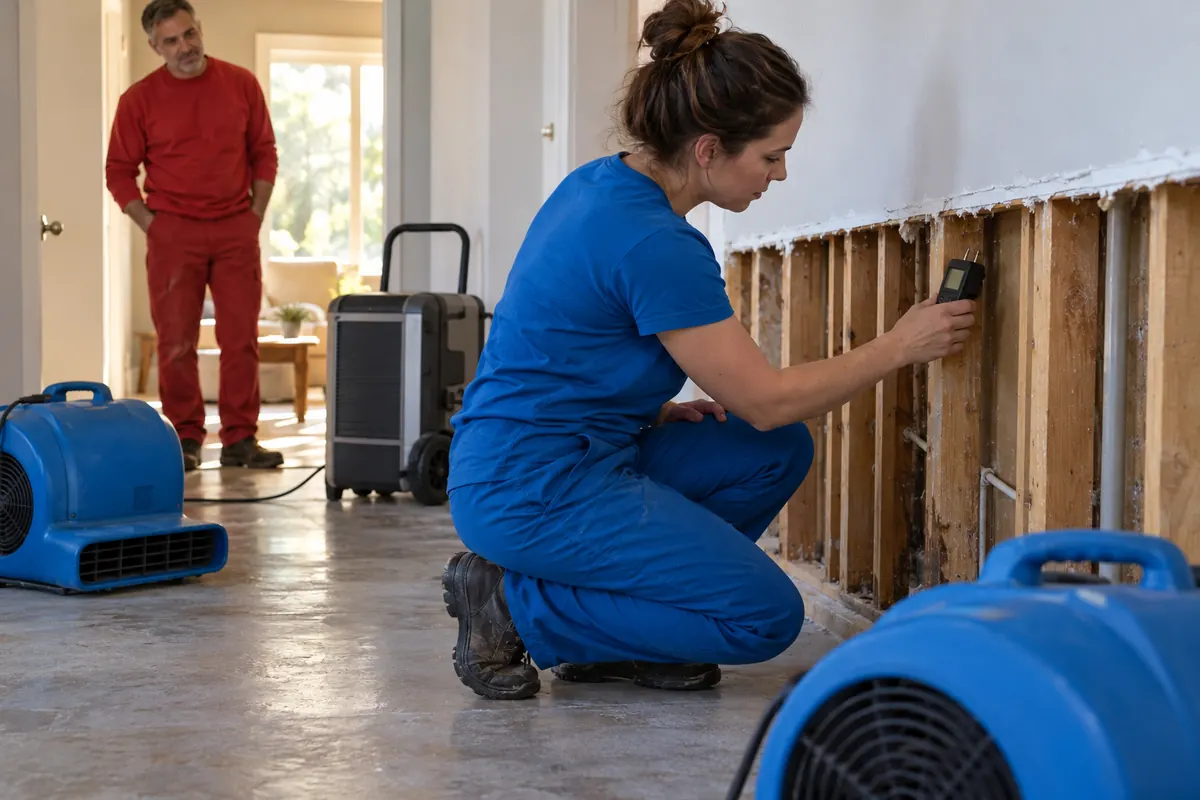
A moisture meter and a thermal camera show how far the water traveled, and we mark the edges.
Open what needs opening
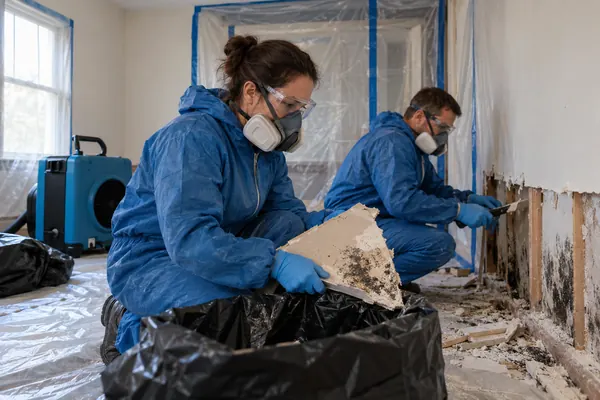
We drill weep holes, pull baseboards or cut a drywall flood line so air can reach wet cavities.
Place air movers
Fans go in at an angle along walls and across floors, set up for how air actually moves through your rooms.
Run dehumidifiers
Low-grain refrigerant or desiccant units pull the vapor out of the air so drying can keep going.
Check every day
A tech returns daily, records readings, and moves or removes equipment as areas reach target.
Confirm dry
Equipment comes out only when readings match a dry reference point in unaffected material.
Why a wall that feels dry may not be
Surface touch does not tell you what is inside the cavity. Signs moisture is still there:
- Paint that bubbles, blisters or peels weeks after a leak
- Baseboards or door casings that stay cool and slightly damp
- A flat, earthy smell when the HVAC runs
- Floor boards that keep moving after the surface dried
- Windows that fog inside on a mild day
Common drying headaches
- Customers who open windows and bring in humid air
- Cabinets and toe kicks that hold water behind them
- Equipment unplugged to run something else
- Cavity insulation that keeps walls wet
Equipment we place and why
Air movers push dry air across wet surfaces. Refrigerant dehumidifiers pull water vapor out of warm, humid rooms, and desiccant units do the same job in cooler spaces like crawlspaces and unheated garages. Floor drying mats and wall cavity injectors handle spots a fan cannot reach.
We size the equipment to the volume of the room and the amount of water, not to a rule of thumb. Too few machines drag the job out, and too many waste power. Daily readings tell us when to add, move or pull a unit.
Humid air works against you
Summer in Union City means outdoor air that is already close to saturated. Open the windows to help a wet room dry and you pull more moisture in. That is why we close the space and run dehumidifiers instead.
Winter has its own problem. Cold walls and cool floors slow evaporation, so a leak in January can take longer to dry than one in June. Either way the answer is controlled airflow, heat where needed, and a dehumidifier sized for the room.
Questions we hear about this
Why is the equipment so loud and hot?
Dehumidifiers put out heat as they work, and air movers move a lot of air. That noise and warmth means the drying is working.
How much will it raise my power bill?
A typical drying setup draws noticeable power over several days. Your insurer may cover part of it, so keep the bill.
Can you dry wet insulation?
Batt insulation that got soaked usually has to come out. Dense-pack or closed-cell foam can sometimes stay if we can dry the cavity around it.
How do you know it is dry?
We compare readings to dry material in the same house. When the wet area matches, the job is done.
What if the wall has already been closed up?
We can dry through small holes or from behind baseboards. Sometimes a section has to be opened if readings will not drop.
What drying usually runs
Drying jobs are often estimated at $1,000 to $4,500, and the number follows the equipment days, not the square feet alone. A hot, humid week or dense materials means more days. Typical estimate only. Call for an exact quote. See all price ranges.
How to help the drying along
- Keep doors and windows shut once equipment is running
- Set the thermostat where we tell you, usually the 70s
- Do not unplug the equipment to use an outlet. Ask us for an extension cord
- Keep pets and small children away from cords and fan intakes
- Open cabinet doors and closets so air reaches the walls behind them
Read next Wondering what insurance pays for? Read about water damage coverage in Georgia.