Why rental leaks are different
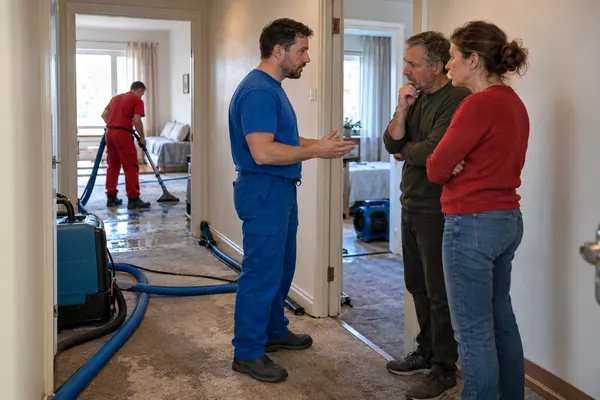
More than half of the people in Union City rent, and a large share of them live in garden-style apartments and townhomes. That means a lot of our work is in buildings where more than one household is affected by the same leak. In more than 20 years of working in them, we have seen the same thing repeatedly. The water is rarely the hardest part. The hard part is that a tenant, a landlord, a property manager and two or three insurance companies are all involved, and each wants something different.
What happens in the first 24 hours usually decides how the rest goes. A fast response, a written record and clear communication save more trouble than any argument later. This post is meant for both sides, because outcomes are better when tenants and landlords are working from the same set of facts.
What a tenant should do first
If you rent and water is coming through the ceiling or across the floor, protect yourself and your belongings first. Move out of any area with a bulging or dripping ceiling. If you can find the shutoff, close it; if you cannot, tell the office or maintenance line so they can shut off the stack. Take dated photos and video of the damage and your belongings before you move anything. Move valuables and electronics to a dry area.
Then put it in writing. A phone call is not enough. Send an email or text to the landlord or property manager describing what happened and attach the photos. Keep a copy. If the unit is not livable, ask in writing about temporary housing or a rent credit, and keep receipts for hotel stays, meals and replacement items. Call your renters insurance company. If you do not have a policy, price one, because a single leak can ruin a couch, a mattress, clothes and electronics.
What a landlord or manager should do first
If you manage the building, respond to the report quickly and tell the tenant when someone will arrive. Shut off water to the affected line, find the source and, if you suspect it is in a unit above, get access to that unit. Check units above and below the one that reported, because water often reaches more than one. Then call a restoration crew rather than a general handyman. A crew with extraction and drying equipment is the difference between drying a ceiling and replacing it.
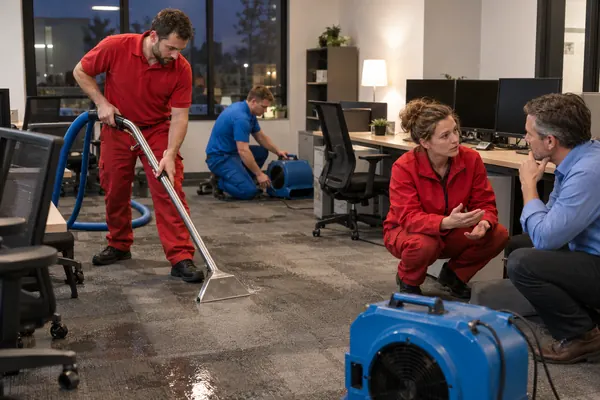
Notify your own insurance carrier and document each unit involved: which rooms, how wet, which tenants reported. Keep tenants informed in writing, even when there is nothing new, because silence is what turns a leak into a dispute. Our apartment and multi-unit water damage page explains how we coordinate across units, and our commercial water damage restoration page covers larger properties.
When the leak starts in another unit
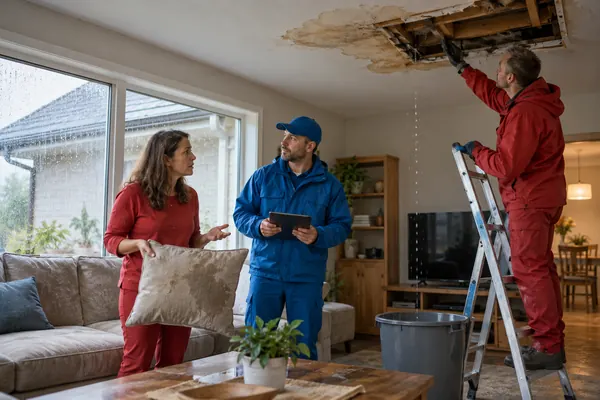
In an apartment, the source is often upstairs. A tub overflow, a washer hose or a failed supply line in one unit can soak the ceiling below and run into the unit next door. The tenant upstairs may not even know. The manager should enter the source unit, find the leak and stop it as soon as the lease and local rules allow, and then walk every unit that might be wet.
If a tenant caused the leak through neglect, such as leaving a tub running, the lease or renters insurance may come into play. A restoration company can document the cause and the damage, but it cannot assign blame. We write down what we find and leave the rest to the people with the lease.
Who pays for what
In general, the landlord is responsible for repairs to the building: ceilings, walls, flooring and plumbing. A tenant is responsible for their own belongings, usually through renters insurance. A renters policy often also covers extra living expenses if a covered loss makes the unit unlivable. If a tenant caused the damage, the lease and local law will decide who pays.
Georgia landlord-tenant law has its own rules about repairs, notice and rent when a unit cannot be lived in. We are not lawyers, so if the damage is serious or a dispute starts, talk to a local housing counselor or legal aid office. Our post on homeowners insurance and water damage in Georgia explains how claims are usually handled on the owner side.
Getting the building dry
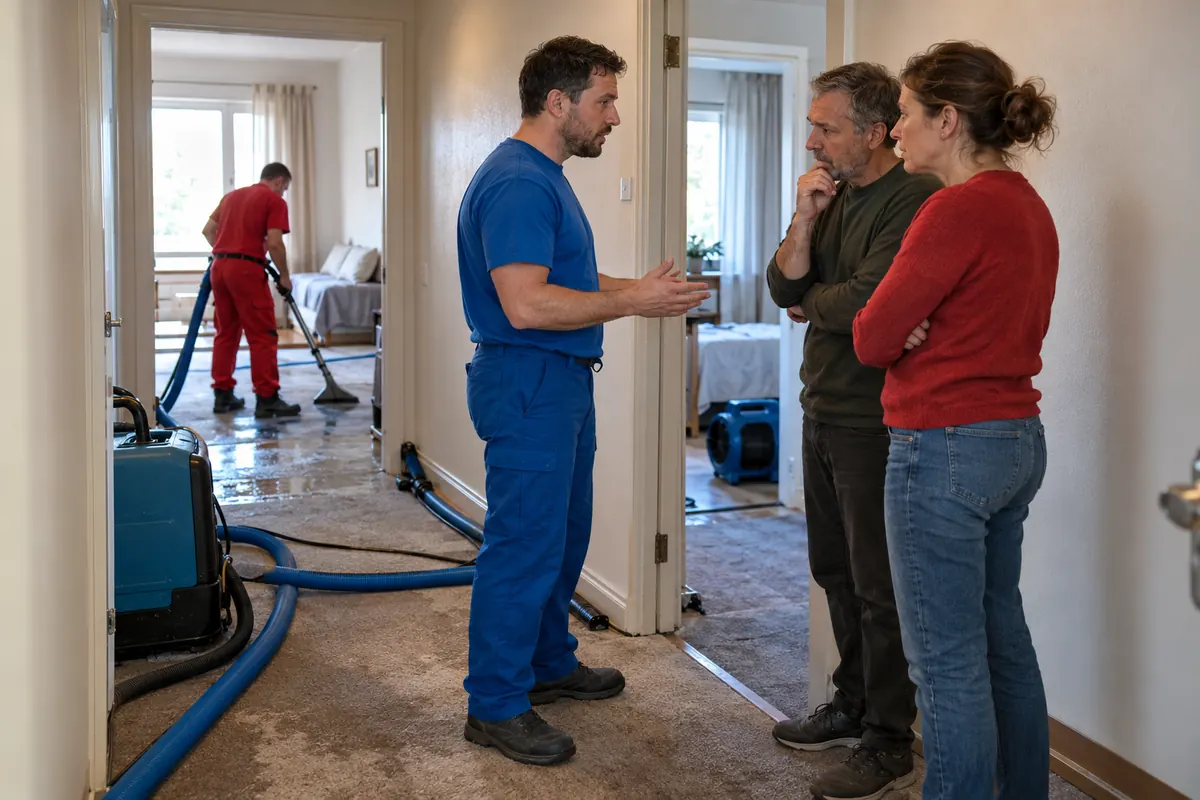
The longer a wet ceiling or wall sits, the more likely mold is. Whoever manages the building should get a crew in right away and give them access. We extract water, open wet walls and ceilings, set equipment and return daily to read moisture. Tenants should know not to unplug the machines or move them, since that slows the drying.
If a ceiling is stained from above, our roof and ceiling leak water damage page explains what we do. If growth has already started, our mold removal page covers the next step. When the readings say dry, we hand over photos, logs and a written scope. That record is what the landlord, the tenant and their insurers will point to, so keep it. For typical ranges, see our pricing page, and for help in an active leak, contact us.
Quick answers
Who calls the restoration company, the tenant or the landlord?
Usually the landlord or property manager, since they own the building and approve the work. A tenant should report the leak in writing and can call us for advice.
Can I withhold rent after a leak?
That depends on your lease and Georgia law. Ask a local housing counselor or legal aid office before withholding anything.
Does renters insurance cover the damage to the walls?
No. A renters policy covers your belongings and often extra living expenses. The building itself is the owner's responsibility.